MOVE WITH ATTENTION

A pose.
A purpose.
Your own pace.

Explore all 10 yoga poses in our current collection. Two matching pictures show the setup and pose; clear cues explain what you are practising and how to make it your own.

Yoga includes more than physical postures and has roots in Indian philosophy. These short practice intentions are learning cues, not a complete account of a tradition. Read NCCIH’s yoga overview ↗.

Balance & concentration · Beginner · support welcome

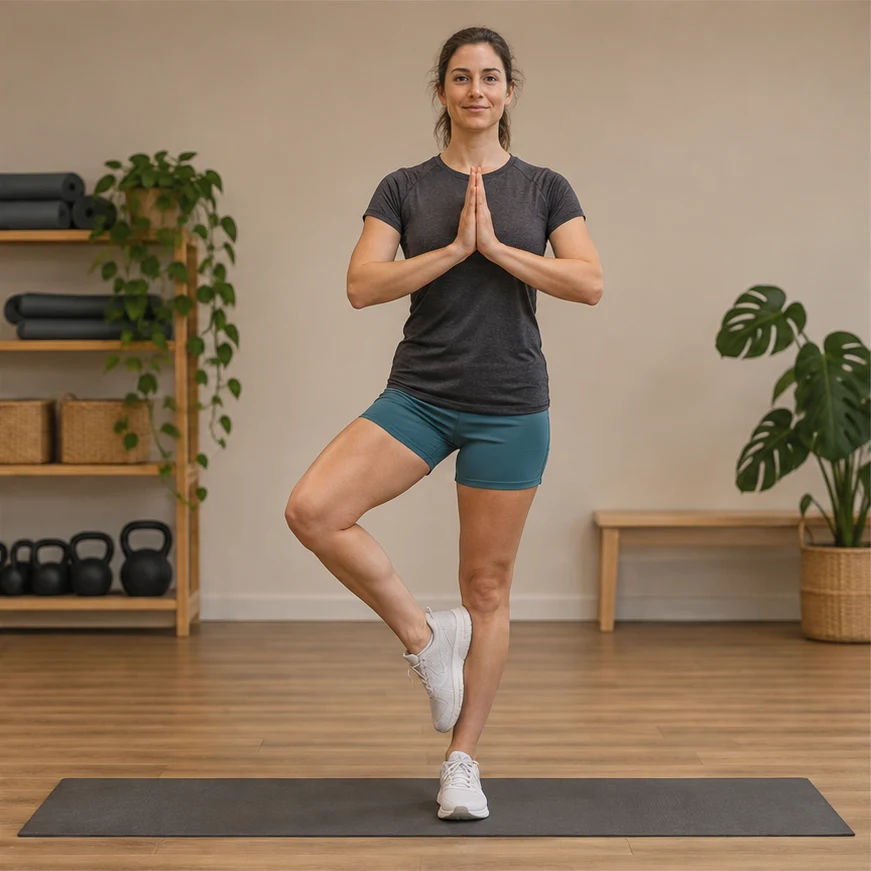
Tree pose

Practise balance with a steady gaze and support available.
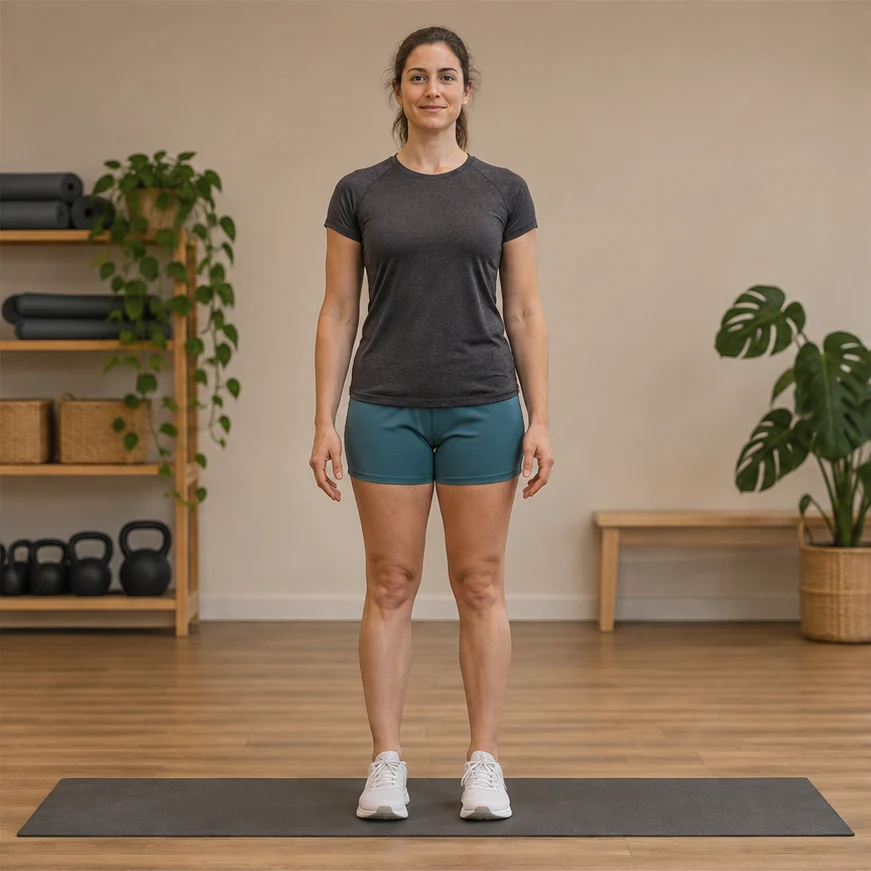
Tree pose · 1 · Starting position
1 · Starting position · View larger ↗
Tree pose · 2 · Working position
2 · Working position · View larger ↗

How to practise

  1. Stand beside a wall or stable support; spread your weight over the standing foot.
  2. Turn the other knee gently outward. Rest that foot against the ankle or inner calf, clear of the knee joint.
  3. Keep your pelvis comfortably level and look at a still point. Bring hands together only if balance feels steady.
  4. Lower the foot with control and change sides.

Breathing & pace

Keep an easy breath and a steady gaze. Lower the foot whenever you need to reset.

Practical benefits

Single-leg balance and awareness of hip position.

Name & practice intention

The tree is an image of rooted support and upright growth. Use the pose to practise returning your attention after a wobble; steadiness does not require standing without support.

Make it easier

Keep the raised toes on the floor and hold a wall with one hand.

Avoid forcing the shape

Pressing the foot into the knee or forcing the raised knee farther outward.

Add photos / video for this pose →

Movement reference · Mayo Clinic DAHLC ↗. Original LiftLuma practice cues and generated pictures; no source photos copied or endorsement implied.
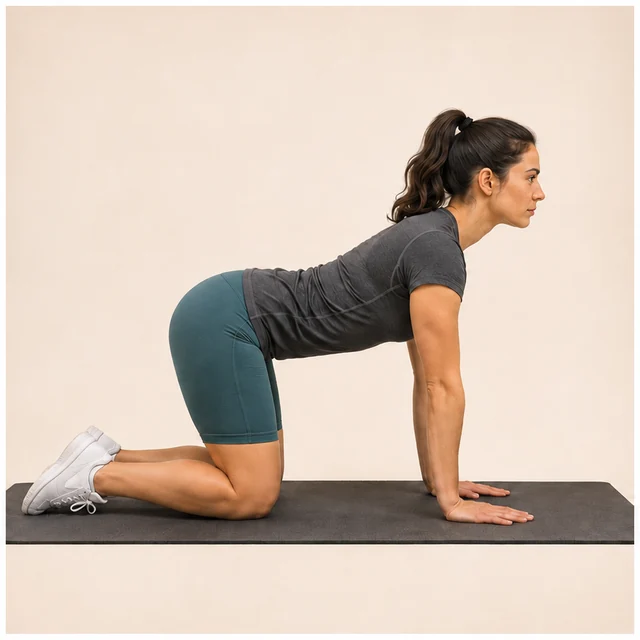
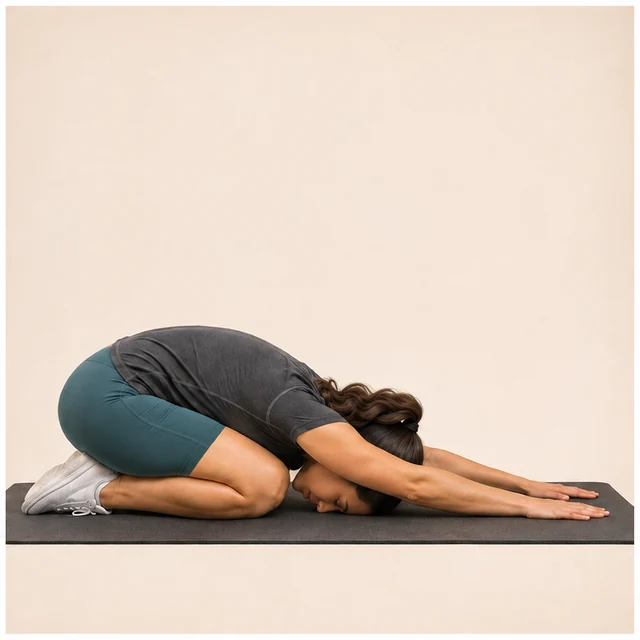
Rest & comfortable mobility · Gentle · kneeling

Child's pose - arms forward

Take a comfortable kneeling rest and notice the breath.

Child's pose - arms forward · 1 · Set up
1 · Set up · View larger ↗
Child's pose - arms forward · 2 · Explore the pose
2 · Explore the pose · View larger ↗

How to practise

  1. Start on hands and knees on a comfortable mat.
  2. Move the hips back toward the heels only as far as comfortable; let the knees separate if that creates space.
  3. Reach arms forward and support the forehead on a folded towel or cushion if the floor is too far away.
  4. Return to hands and knees slowly when ready.

Breathing & pace

Notice your breath without forcing a deeper inhale. Keep the face and neck relaxed.

Practical benefits

A gentle shoulder/hip stretch and a pause between movements.

Name & practice intention

The folded, resting shape gives this pose its name. Its practice intention here is permission to pause; rest is a useful part of a session.

Make it easier

Use a cushion between hips and heels or choose a supported seated rest if kneeling is uncomfortable.

Avoid forcing the shape

Forcing the hips to the heels or pressing the forehead down to match a picture.

Add photos / video for this pose →

Movement reference · Mayo Clinic DAHLC ↗. Original LiftLuma practice cues and generated pictures; no source photos copied or endorsement implied.
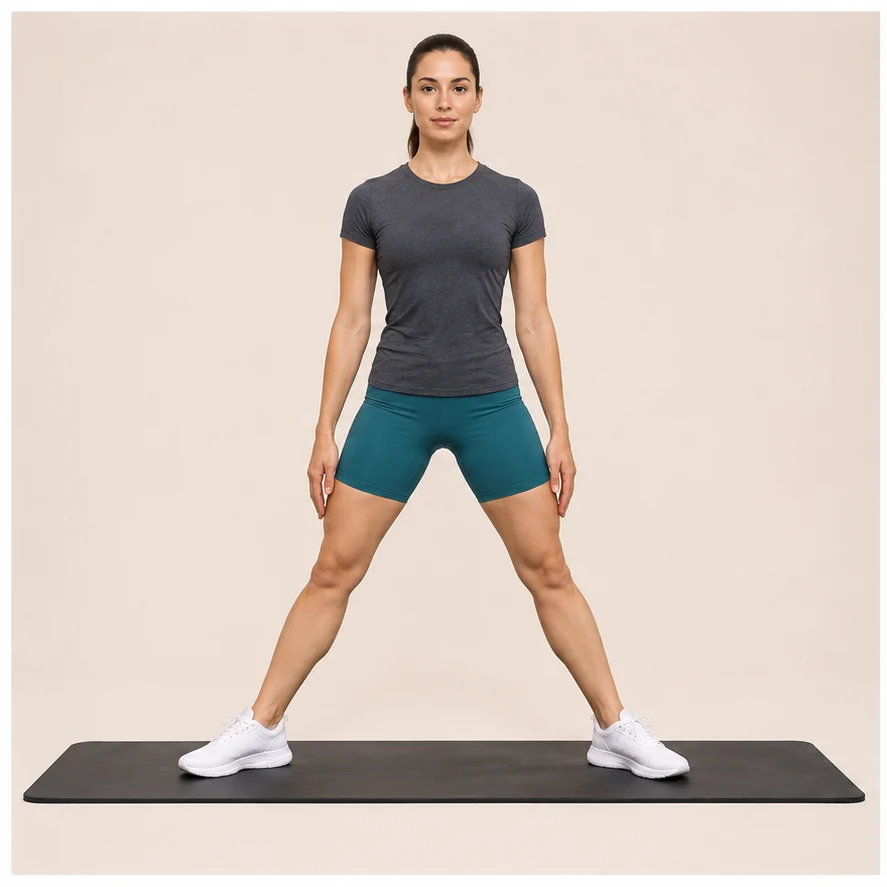
Standing strength & attention · Beginner · adjustable stance

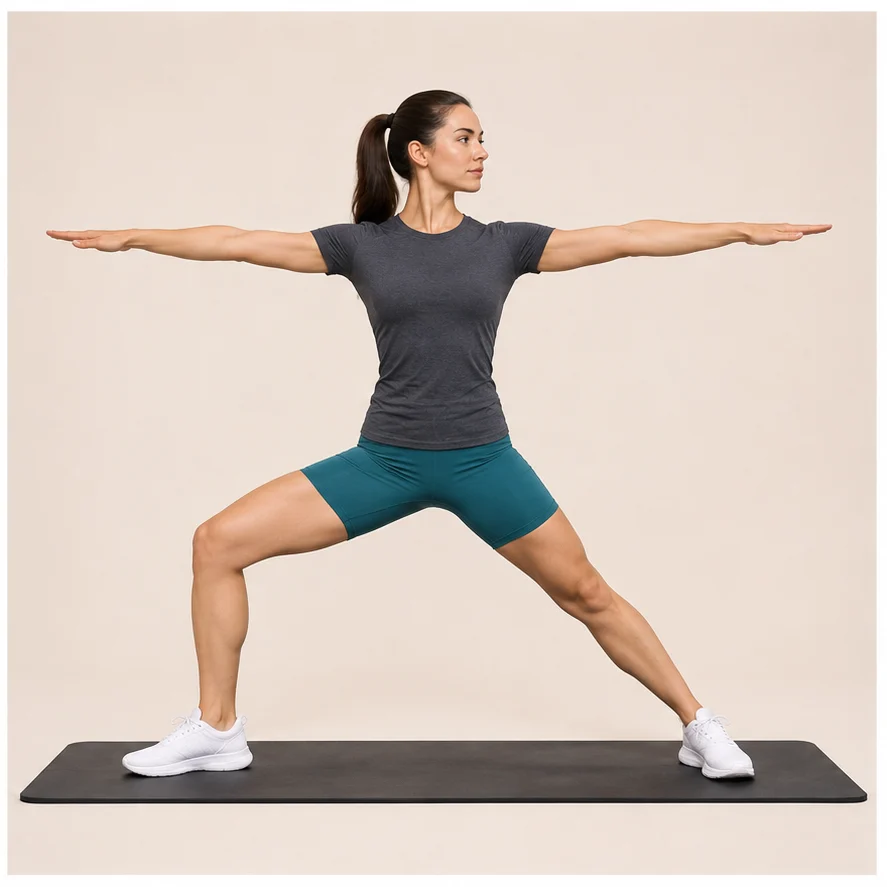
Warrior II

A steady standing stance with controlled breathing.

Warrior II · 1 · Starting position
1 · Starting position · View larger ↗
Warrior II · 2 · Working position
2 · Working position · View larger ↗

How to practise

  1. Take a comfortable wide stance. Turn one foot toward the short end of the mat and angle the rear foot as needed for balance.
  2. Bend the front knee in the direction of its toes, keeping it over the ankle area. Leave the back leg long without locking it.
  3. Open arms at shoulder height, soften shoulders and look over the front hand.
  4. Straighten the front leg, lower arms and repeat on the other side.

Breathing & pace

Breathe steadily while maintaining a stance you can leave with control.

Practical benefits

Leg endurance, balance and comfortable hip movement.

Name & practice intention

Warrior poses have stories and interpretations across yoga traditions. Our intention is composed effort: an alert gaze and a stable base, without straining to look powerful.

Make it easier

Shorten the stance, bend the front knee less and rest hands on hips.

Avoid forcing the shape

Letting the front knee collapse inward or lifting the shoulders toward the ears.

Add photos / video for this pose →

Movement reference · Mayo Clinic DAHLC ↗. Original LiftLuma practice cues and generated pictures; no source photos copied or endorsement implied.
Side-body reach & leg endurance · Beginner · small side bend

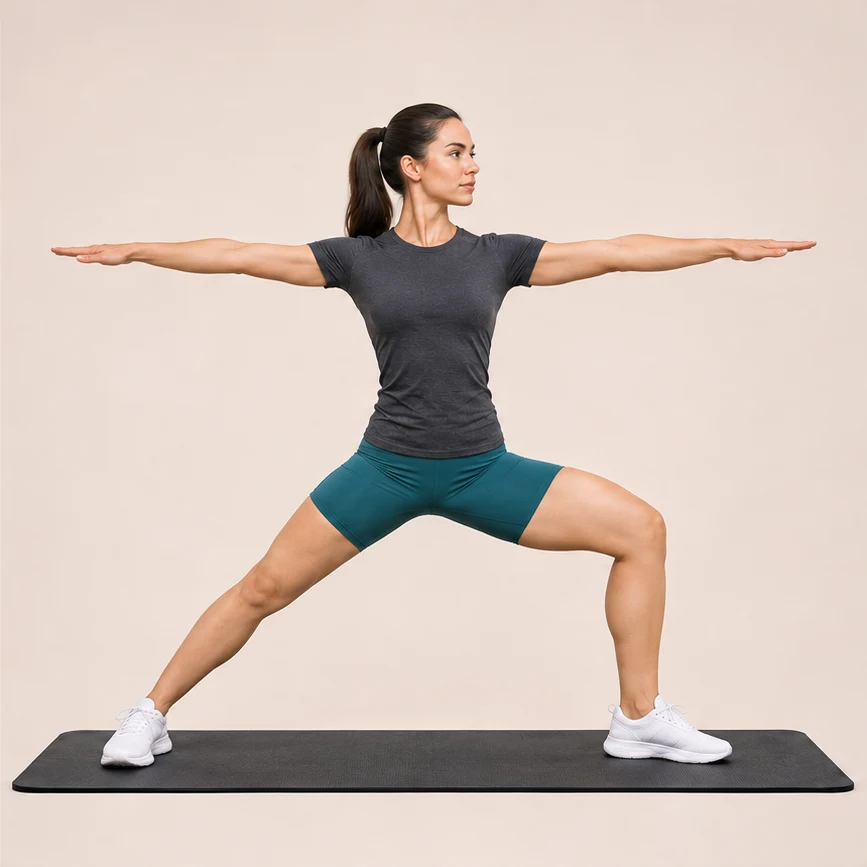
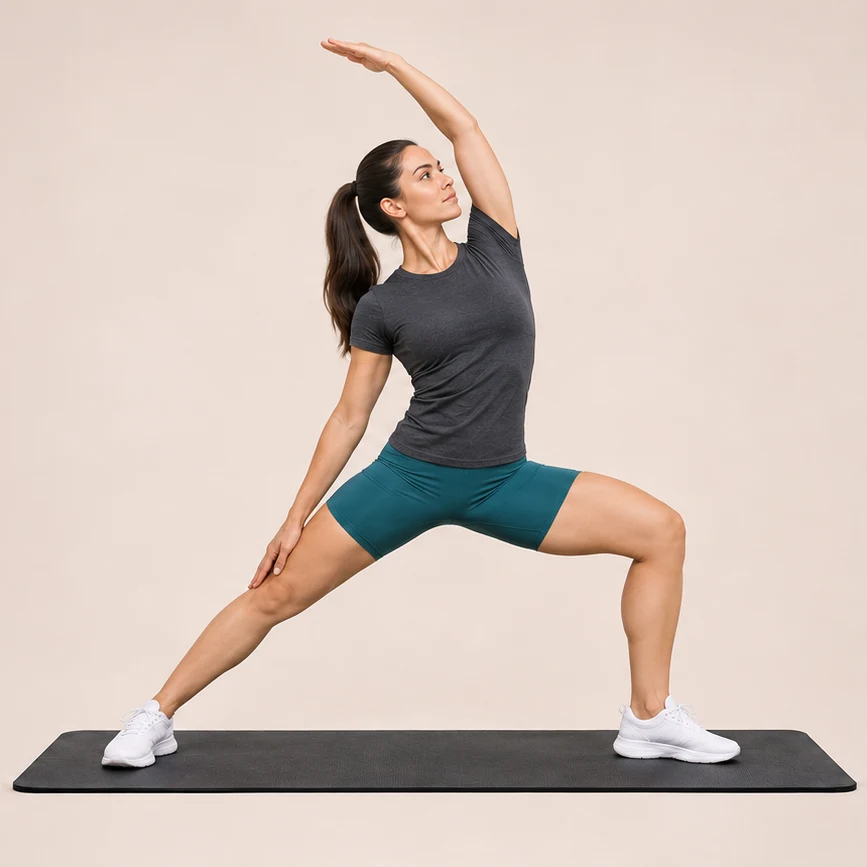
Reverse warrior

A gentle side reach from a stable standing stance.

Reverse warrior · 1 · Set up
1 · Set up · View larger ↗
Reverse warrior · 2 · Explore the pose
2 · Explore the pose · View larger ↗

How to practise

  1. Set up a comfortable Warrior II stance with the front knee tracking its toes.
  2. Turn the front palm upward and reach that arm up and slightly back, lengthening through the side of the torso.
  3. Rest the rear hand lightly on the rear thigh. Keep the front knee bend comfortable and the neck long.
  4. Return to Warrior II, lower arms and change sides.

Breathing & pace

Keep breathing easily into the space around the ribs; the reach can stay small.

Practical benefits

Leg endurance and side-body mobility.

Name & practice intention

This variation changes the direction of the warrior's reach. Treat the lifted arm as a cue for length and spacious breathing, rather than a target for bending farther.

Make it easier

Use a shorter stance and look forward rather than toward the raised hand.

Avoid forcing the shape

Pushing weight into the rear hand, straightening the front knee unintentionally or forcing a deep backbend.

Add photos / video for this pose →

Movement reference · Mayo Clinic DAHLC ↗. Original LiftLuma practice cues and generated pictures; no source photos copied or endorsement implied.
Gentle spinal movement · Beginner · hands & knees

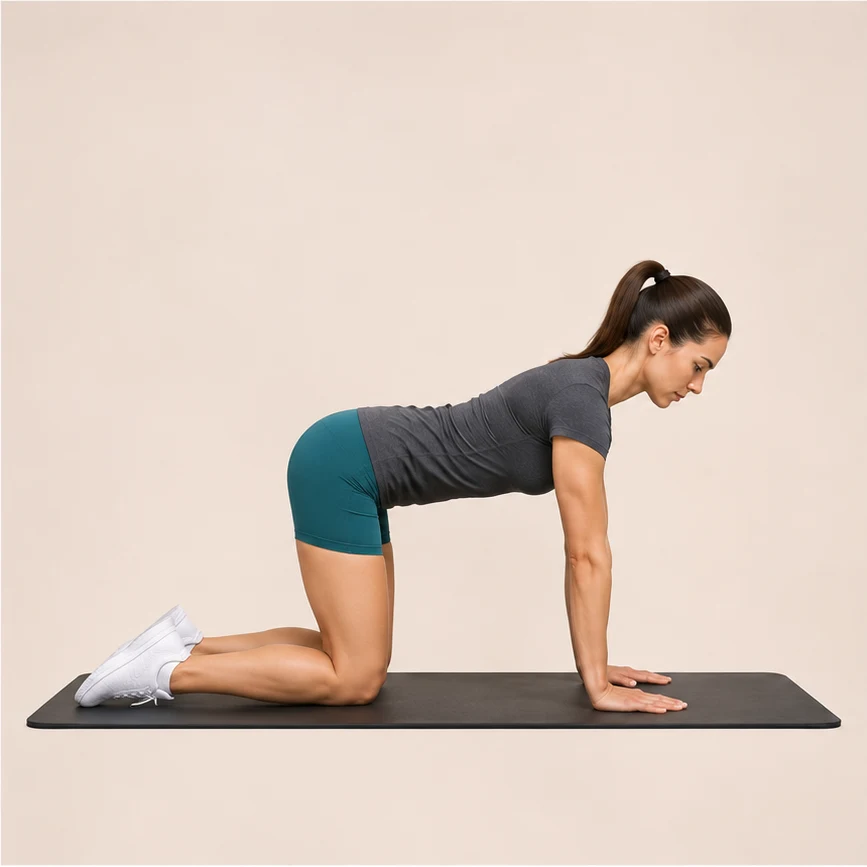
Cow pose

Gentle spinal movement coordinated with breath.

Cow pose · 1 · Set up
1 · Set up · View larger ↗
Cow pose · 2 · Explore the pose
2 · Explore the pose · View larger ↗

How to practise

  1. Start on hands and knees, hands beneath shoulders and knees beneath hips.
  2. Gently tip the pelvis and lift the chest a little to create a comfortable curve through the spine.
  3. Keep the back of the neck long and look slightly ahead on the floor; avoid throwing the head back.
  4. Return to a neutral tabletop before repeating.

Breathing & pace

Try an easy inhale into the gentle opening and an unforced exhale back to neutral.

Practical benefits

Controlled back movement and awareness of torso position.

Name & practice intention

The animal name describes the softly curved shape. Use it as an image for exploring movement with breath, not as an instruction to make a dramatic arch.

Make it easier

Reduce the movement and pad the knees. If hands and knees are uncomfortable, practise a small seated chest lift instead.

Avoid forcing the shape

Dropping the belly abruptly, forcing the lower back or lifting the chin sharply.

Add photos / video for this pose →

Movement reference · Mayo Clinic DAHLC ↗. Original LiftLuma practice cues and generated pictures; no source photos copied or endorsement implied.
Shoulder support & back-leg mobility · Beginner · weight through hands

Downward-facing dog

A supported inverted-V shape with a long back.

Downward-facing dog · 1 · Starting position
1 · Starting position · View larger ↗
Downward-facing dog · 2 · Working position
2 · Working position · View larger ↗

How to practise

  1. From hands and knees, spread fingers, tuck toes and lift hips up and back.
  2. Keep knees softly bent as needed so the back can lengthen. Press through the hands without forcing the shoulders.
  3. Let heels reach toward the floor without needing to touch it. Keep the neck comfortable between the arms.
  4. Lower knees slowly to the mat to finish.

Breathing & pace

Maintain an easy breath and come down if the position feels strained.

Practical benefits

Shoulder support and a comfortable calf/hamstring stretch.

Name & practice intention

The name evokes a dog stretching. Our practice cue is length and comfortable support, rather than making a perfect triangle.

Make it easier

Keep knees more bent, or place hands on a stable wall and move hips back for a standing variation.

Avoid forcing the shape

Forcing straight knees or flat heels at the expense of a comfortable back and shoulders.

Add photos / video for this pose →

Movement reference · Mayo Clinic DAHLC ↗. Original LiftLuma practice cues and generated pictures; no source photos copied or endorsement implied.
Relaxed forward fold · Beginner · soft knees

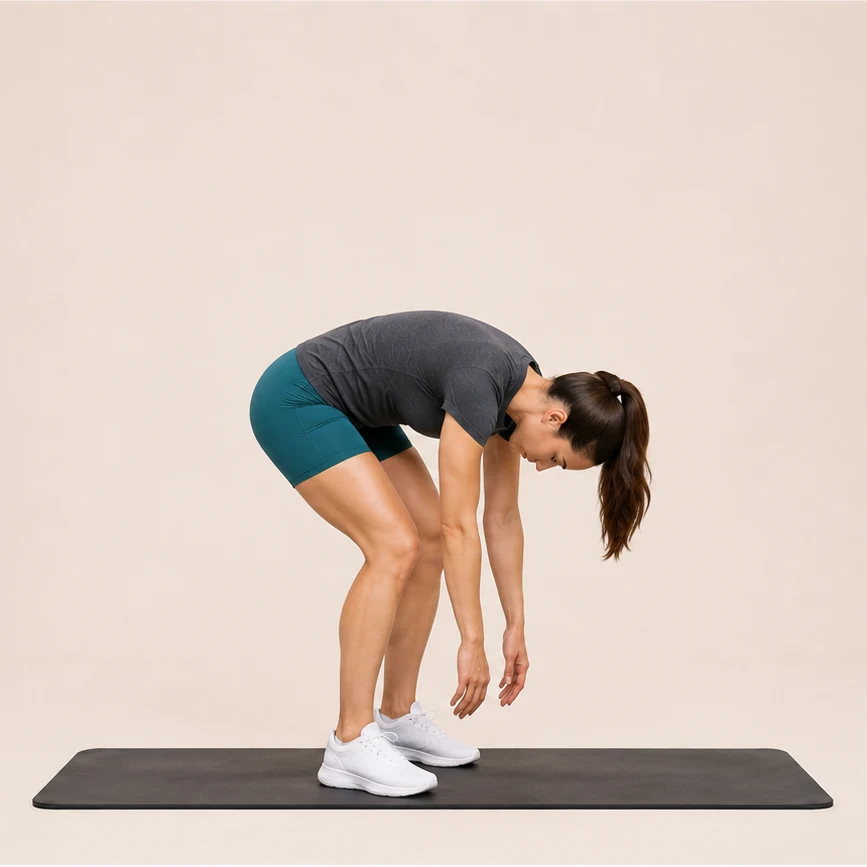
Rag doll - relaxed forward fold

A relaxed, supported forward fold.

Rag doll - relaxed forward fold · 1 · Set up
1 · Set up · View larger ↗
Rag doll - relaxed forward fold · 2 · Explore the pose
2 · Explore the pose · View larger ↗

How to practise

  1. Stand with feet comfortably apart and knees soft.
  2. Fold at the hips into a comfortable range, bending the knees as much as needed.
  3. Let arms and head hang without pulling down. Keep balance over the whole foot.
  4. Return upright slowly with bent knees, using support if needed.

Breathing & pace

Breathe naturally and relax unnecessary effort. Rise slowly rather than holding the breath.

Practical benefits

A gentle posterior-leg stretch and awareness of unnecessary effort.

Name & practice intention

A rag doll suggests letting go of unnecessary tension. The intention is a gentle pause, not an obligation to fold deeply or touch the floor.

Make it easier

Rest hands on thighs or a stable chair and keep the torso higher.

Avoid forcing the shape

Locking the knees, bouncing or pulling the head toward the floor.

Add photos / video for this pose →

Movement reference · Mayo Clinic DAHLC ↗. Original LiftLuma practice cues and generated pictures; no source photos copied or endorsement implied.
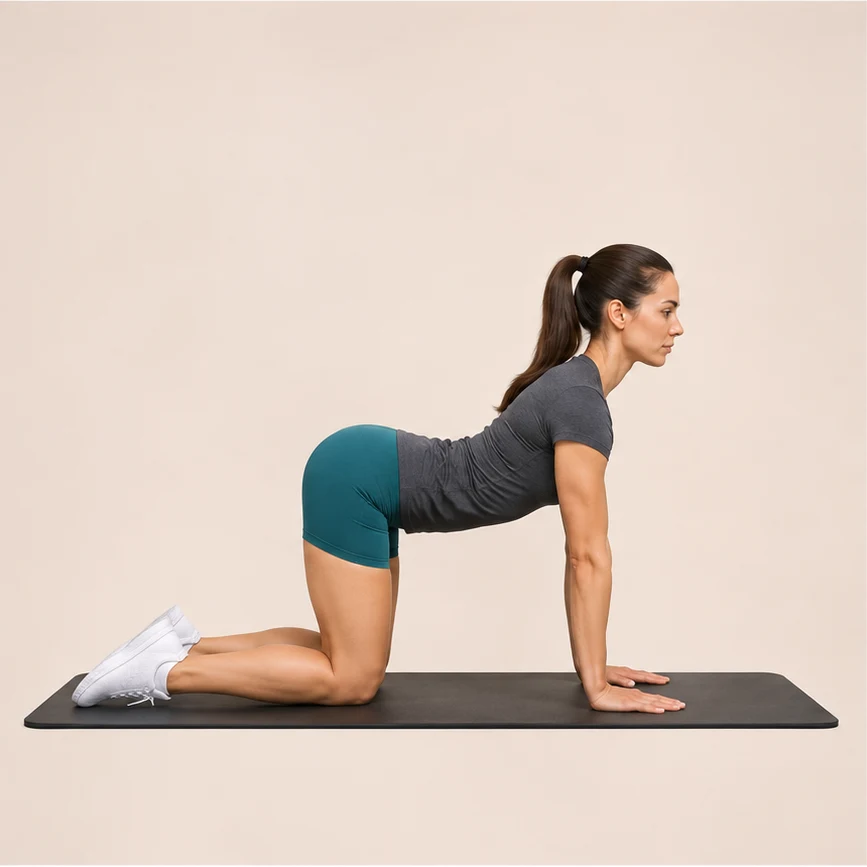
Leg endurance & trunk control · Beginner · shallow squat

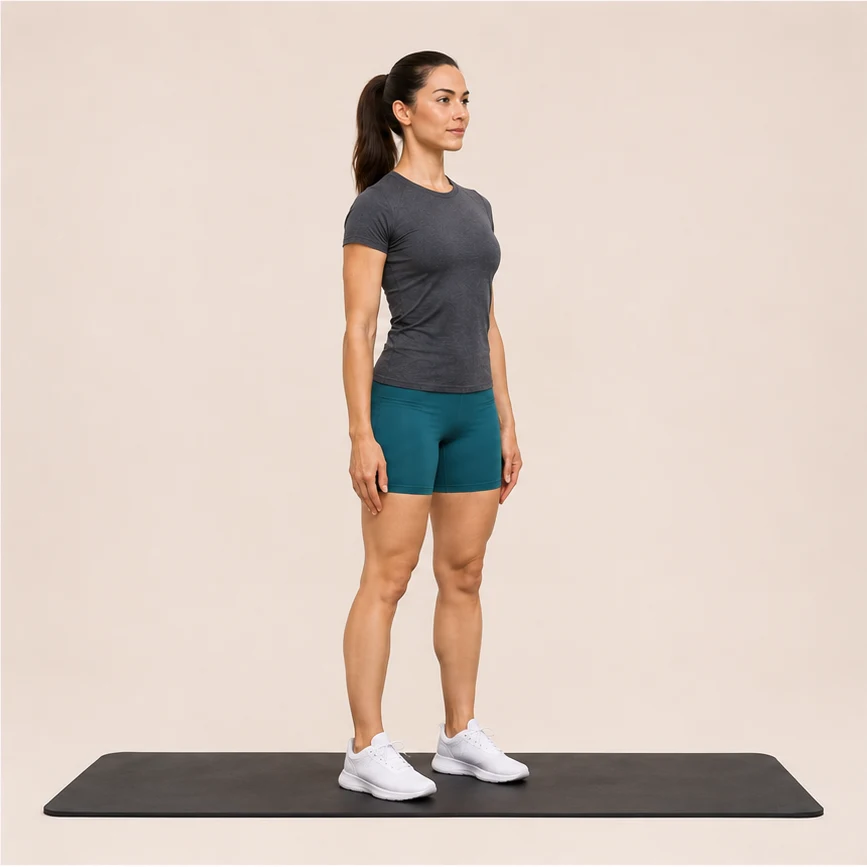
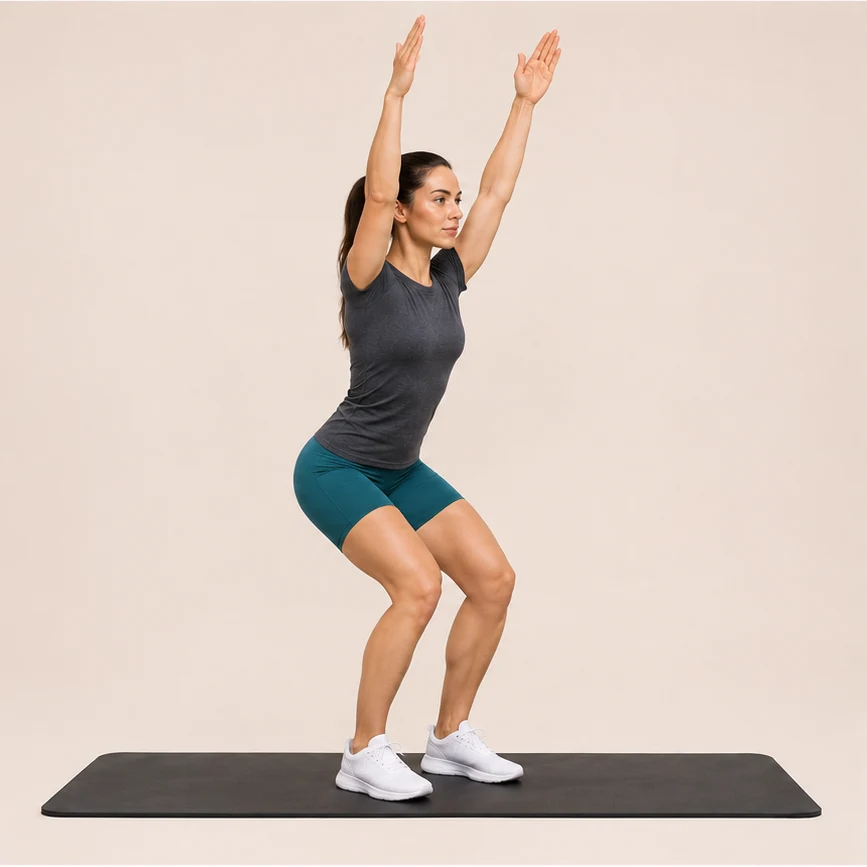
Chair pose

Controlled leg work in a standing balance.

Chair pose · 1 · Set up
1 · Set up · View larger ↗
Chair pose · 2 · Explore the pose
2 · Explore the pose · View larger ↗

How to practise

  1. Stand with feet comfortably close or hip-width apart.
  2. Bend knees and send hips a little back as if approaching a chair, keeping heels grounded.
  3. Reach arms up only as far as comfortable, keep ribs settled and knees tracking the toes.
  4. Press through the feet to stand and lower the arms.

Breathing & pace

Keep the breath moving through a depth you can sustain without bracing hard.

Practical benefits

Thigh and hip endurance alongside trunk control.

Name & practice intention

The shape resembles sitting without a chair. Practise steady, manageable effort; a small bend still counts.

Make it easier

Use a shallower bend or hold a stable chair; keep hands at the chest if overhead reaching is uncomfortable.

Avoid forcing the shape

Lifting heels, allowing knees to fall inward or arching the back to lift the arms higher.

Add photos / video for this pose →

Movement reference · Mayo Clinic DAHLC ↗. Original LiftLuma practice cues and generated pictures; no source photos copied or endorsement implied.
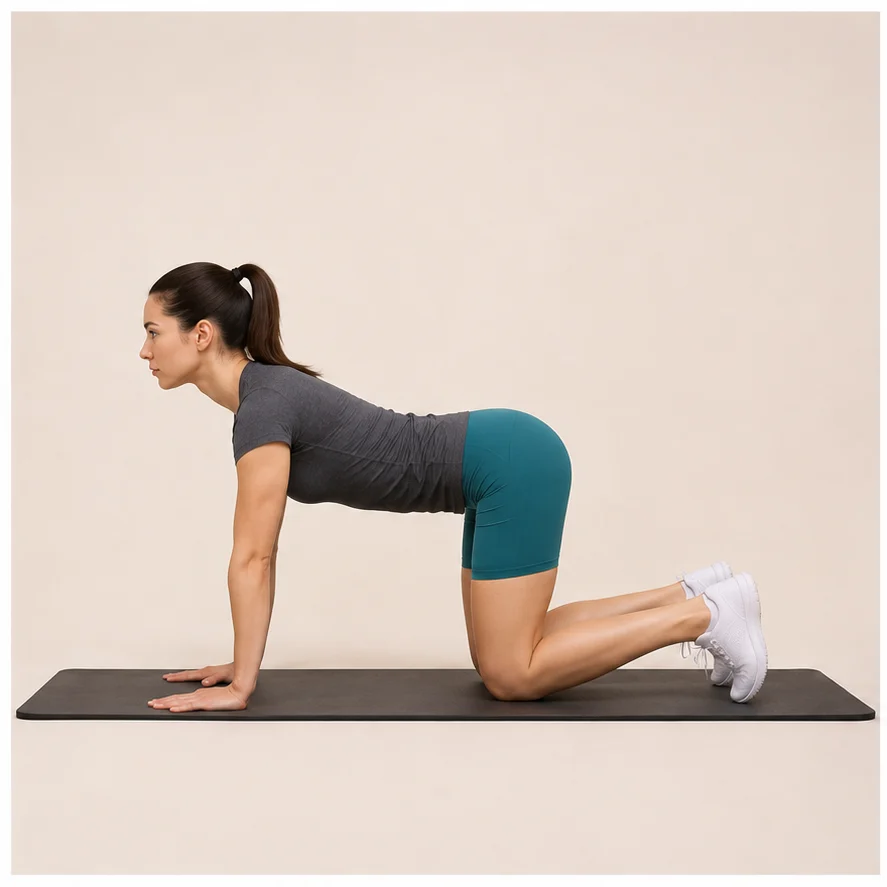
Upper-body support & trunk strength · Advanced · controlled support

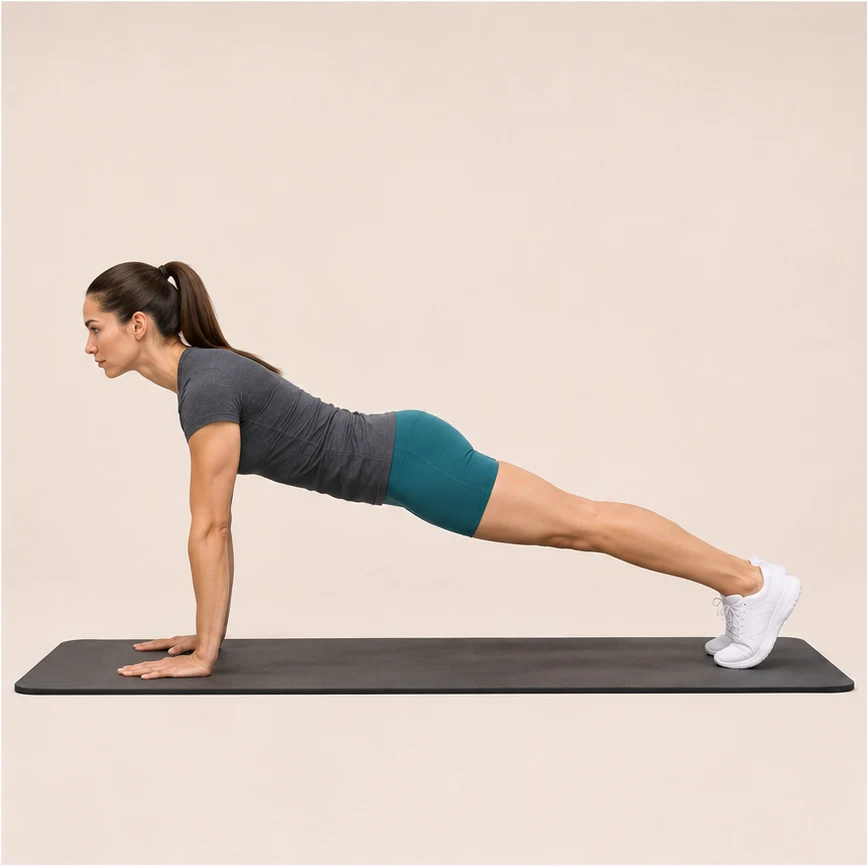
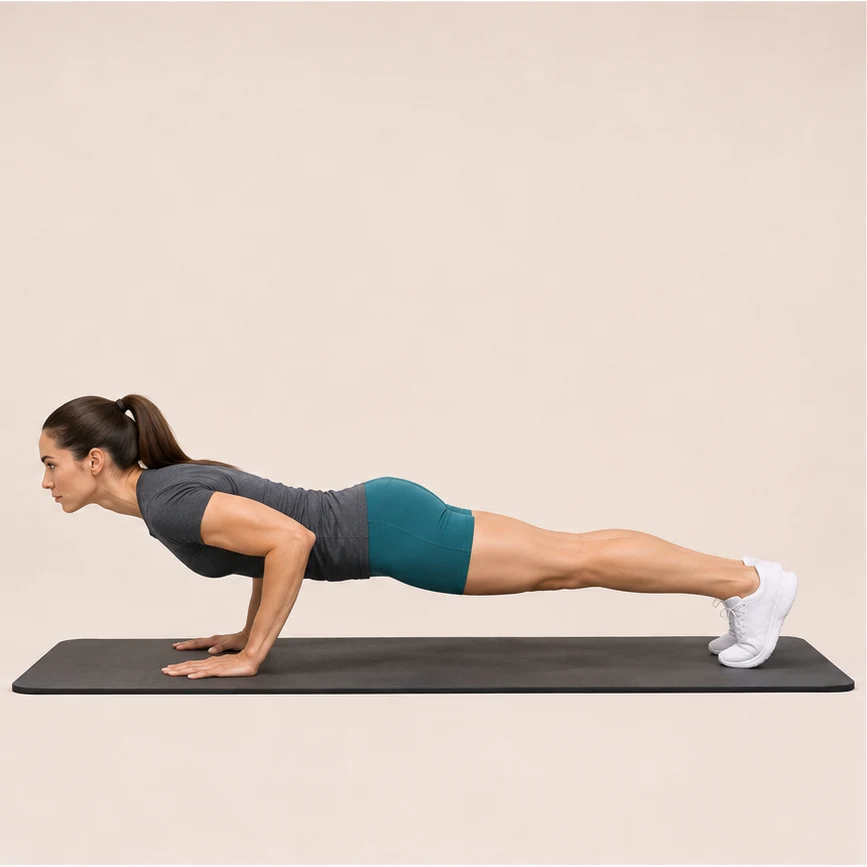
Chaturanga - controlled low-plank practice

Upper-body support for experienced yoga practice.

Chaturanga - controlled low-plank practice · 1 · Set up
1 · Set up · View larger ↗
Chaturanga - controlled low-plank practice · 2 · Explore the pose
2 · Explore the pose · View larger ↗

How to practise

  1. Begin in a stable high plank with hands beneath shoulders and the body supported in one long line.
  2. Bend elbows close to the ribs and lower only as far as you can control, keeping shoulders at or above elbow height.
  3. Avoid letting the hips sag or the head drop. End the attempt before control fades.
  4. Lower knees and rest, or return to high plank if that is already comfortable.

Breathing & pace

Exhale gently while lowering; keep breathing rather than holding a strained low position.

Practical benefits

Pushing strength and trunk stability; suitable preparation is needed.

Name & practice intention

The staff-like image is a cue for a long, supported body. Control and a suitable variation matter more than holding the lowest possible position.

Make it easier

Use knees-down practice or a wall push-up with a small elbow bend; seek instruction before adding load through the wrists and shoulders.

Avoid forcing the shape

Dropping shoulders below elbows, flaring elbows wide or losing the supported trunk position.

Add photos / video for this pose →

Movement reference · Mayo Clinic DAHLC ↗. Original LiftLuma practice cues and generated pictures; no source photos copied or endorsement implied.
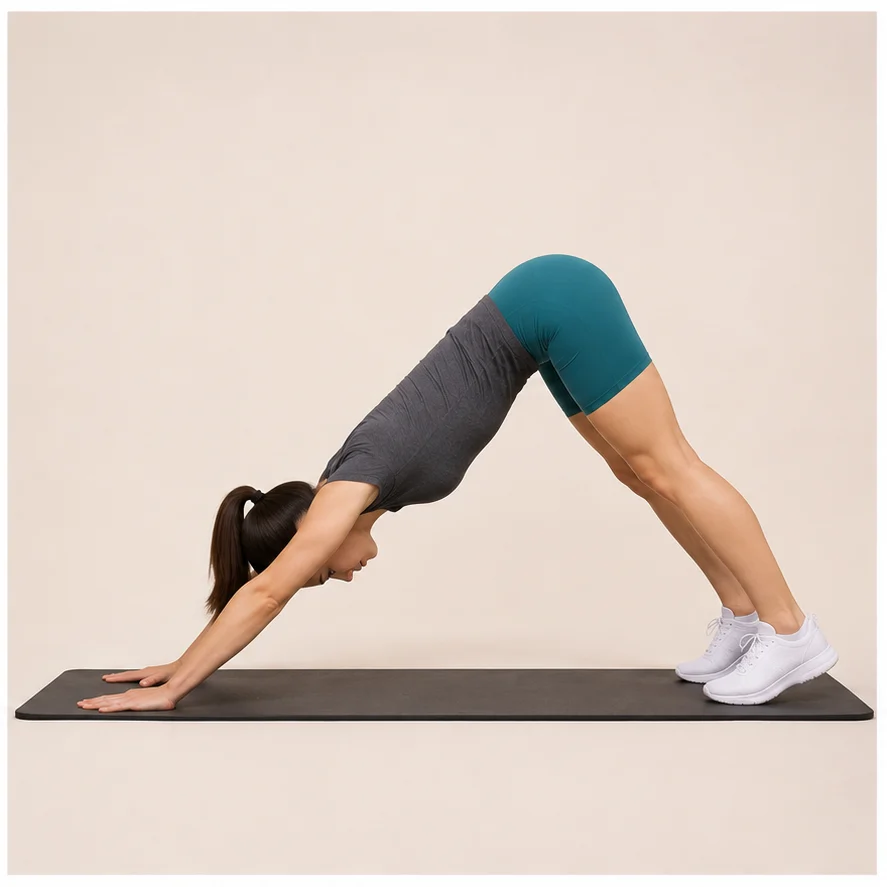
Controlled rotation & standing balance · Intermediate · small range

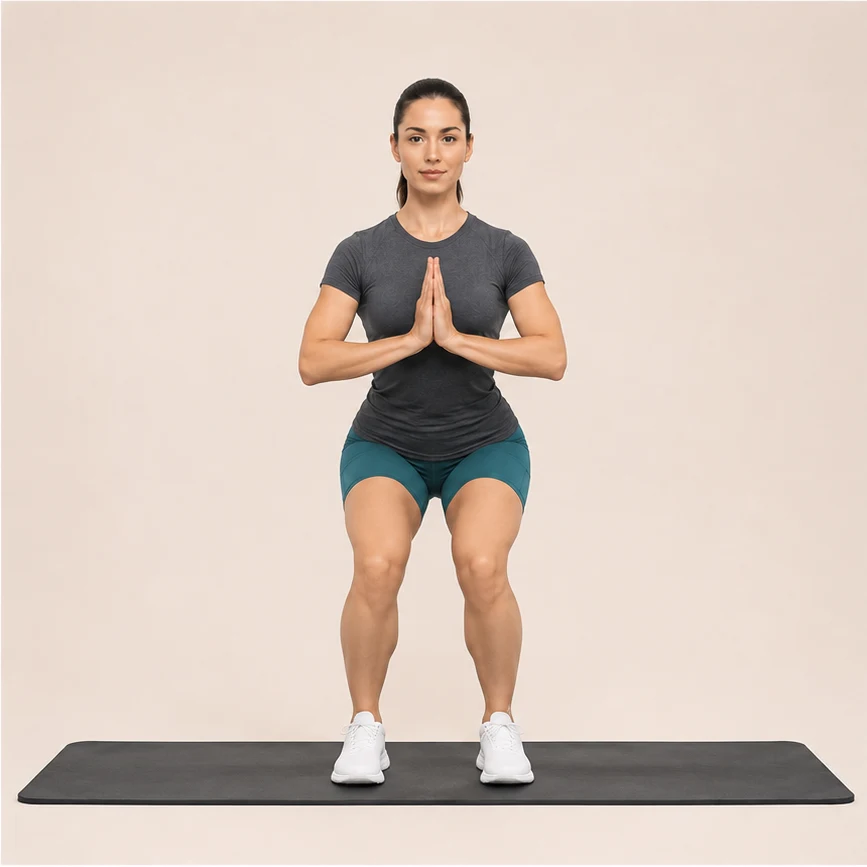
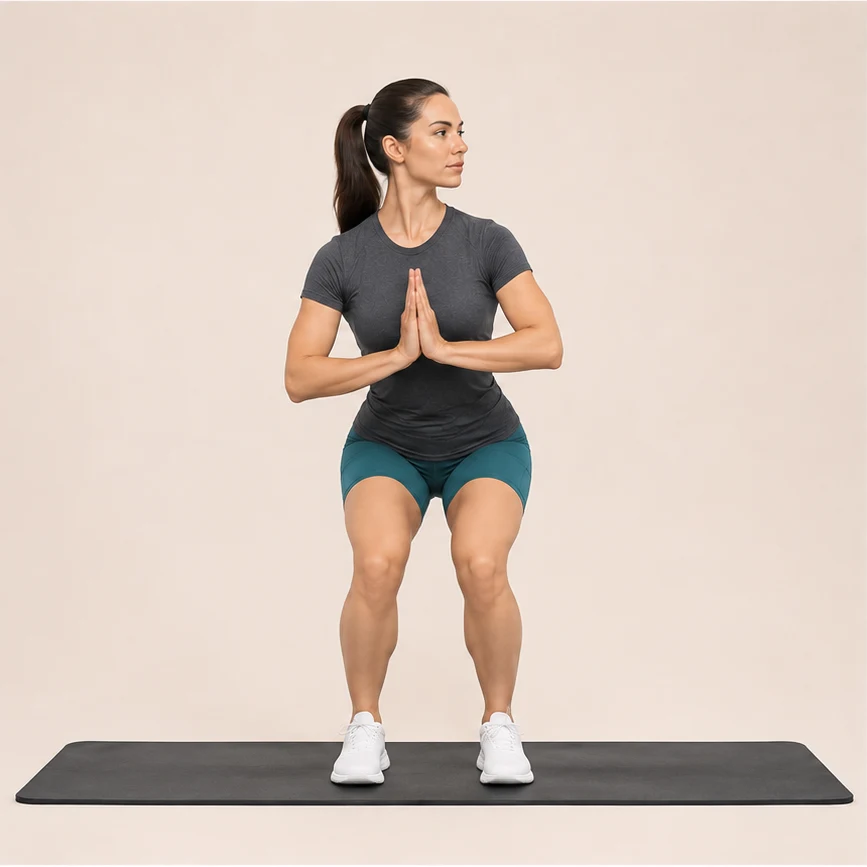
Chair prayer twist - small range

A small torso rotation with a stable stance.

Chair prayer twist - small range · 1 · Set up
1 · Set up · View larger ↗
Chair prayer twist - small range · 2 · Explore the pose
2 · Explore the pose · View larger ↗

How to practise

  1. Begin in a shallow chair stance with feet parallel, heels grounded and knees tracking the toes.
  2. Bring palms together at the chest and lengthen through the torso.
  3. Rotate the upper torso a little to one side without shifting the knees or using the arms to force the turn.
  4. Return to centre, stand if needed and repeat toward the other side.

Breathing & pace

Breathe comfortably in the small rotation and return to centre between sides.

Practical benefits

Balance, leg endurance and controlled trunk rotation.

Name & practice intention

Hands together can provide a quiet point of focus. Spiritual interpretations vary by tradition; here the intention is attentive movement without forcing the twist.

Make it easier

Make the squat and turn smaller, or practise an easy seated turn with feet supported.

Avoid forcing the shape

Levering the elbow against a knee to force range, or letting the knees move with the shoulders.

Add photos / video for this pose →

Movement reference · Mayo Clinic DAHLC ↗. Original LiftLuma practice cues and generated pictures; no source photos copied or endorsement implied.
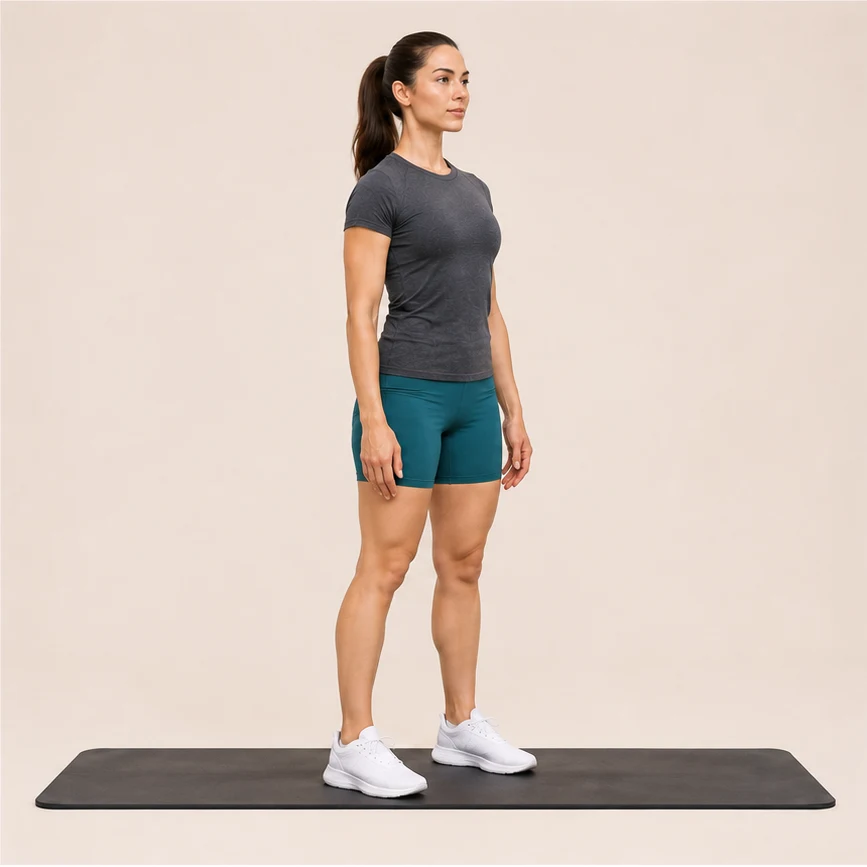
YOUR TRAINING. ONE TAP AWAY.

Add LiftLuma
to your home screen.

Open it like an app, with its own icon and a focused screen. Installation is free and does not start a paid membership.

iPhone or iPad

Open this site in Safari. Tap Share, choose Add to Home Screen, then tap Add. If shown, keep Open as Web App enabled.

Android

Open this site in Chrome. Open the ⋮ menu and choose Install app or Add to Home screen, then confirm.

Computer

In Chrome or Edge, look for the install icon in the address bar or the browser menu.

Using a social media or in-app browser? Open this page in Safari or Chrome first. Menu names and install availability vary by browser. Current workout recovery can stay on this device when the connection drops. Open LiftLuma online once to prepare recovery; cloud sync needs a connection.